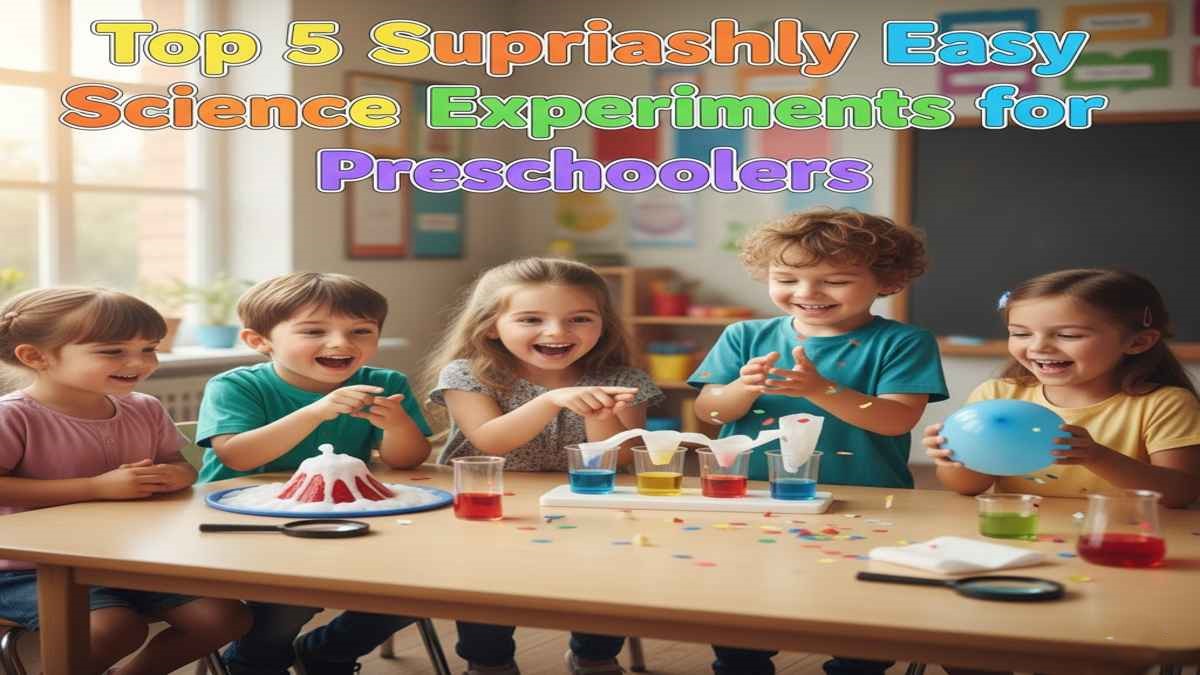
Science isn’t just for labs — it starts right at home! Preschoolers are naturally curious, and these 5 surprisingly easy science experiments for Preschool will help you turn that curiosity into excitement and learning. Using safe, everyday household items, your little scientist will explore colors, bubbles, reactions, and more — all while developing observation and reasoning skills.
Learning science early helps kids understand how the world works, just like real discoveries in How Fusion Energy Works or New Human Organ Discovered in 2025. Let’s dive into fun experiments that will blow your preschooler’s mind!
🧪 Experiment No. 1 — Magic Milk Explosion
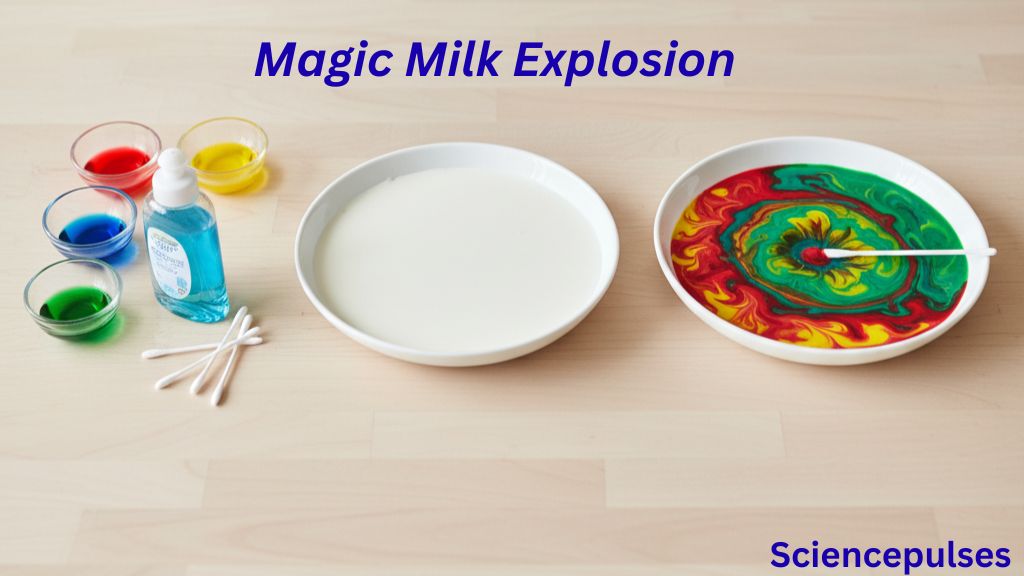
Dish soap reacts with the fat molecules in milk and breaks the surface tension. As the soap bonds with the fat, it causes the food coloring on the surface to swirl and move rapidly. This creates a colorful explosion effect — a fun and visual way to show chemical reactions and surface tension
🔬 Magic Milk Explosion
Quick, visual chemistry experiment — great for preschoolers (supervised).
🧾 Materials
- 🥛 Whole milk (shallow dish)
- 🎨 Food coloring (multiple colors)
- 🧼 Dish soap (liquid)
- 🧴 Cotton swabs (or a small stick)
🛠️ Steps
- Pour milk into a shallow dish so the surface is covered.
- Add 3–5 drops of different food coloring spaced across the milk.
- Dip a cotton swab in dish soap until coated.
- Touch the soapy swab gently to the milk’s surface and watch the colors burst and swirl.
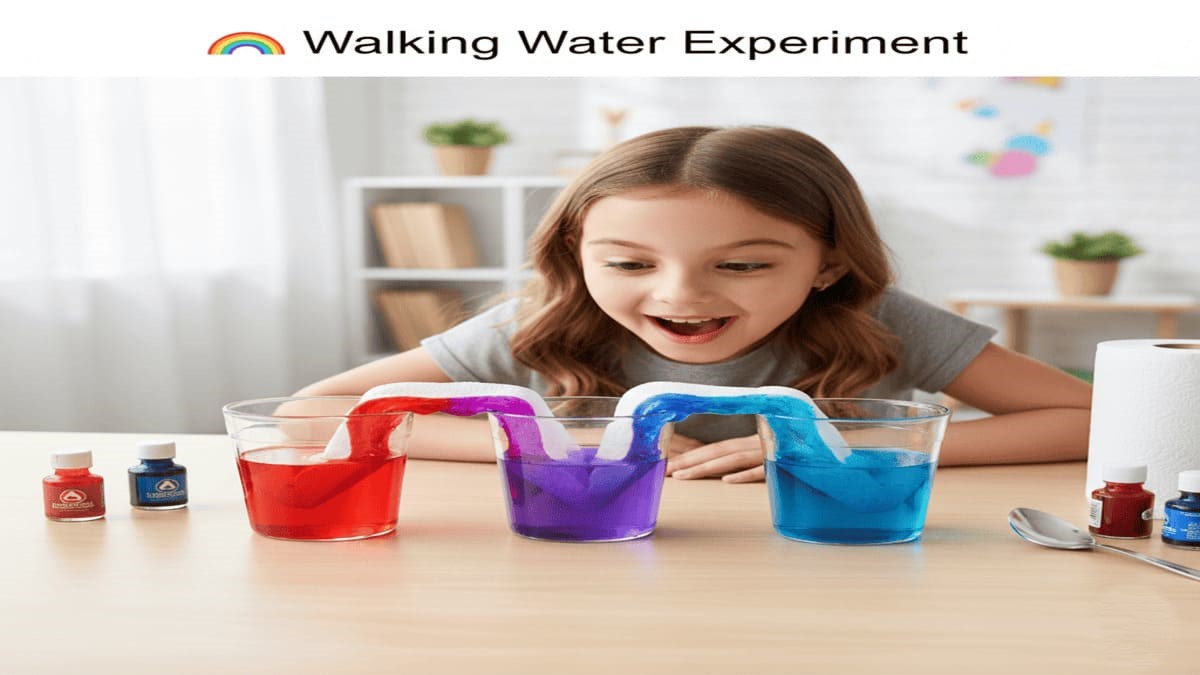
💧 Experiment No. 2 — Water Walking Experiment
This simple experiment shows capillary action, the same process plants use to move water from their roots to their leaves. When you place paper towels between cups of colored water, the water “walks” up the paper towel fibers and moves into the empty cups. The colors mix to form new ones, helping kids see how water travels and how colors combine.
🌡️ Walking Water Experiment
A colorful experiment showing how water moves — perfect for young scientists!
🧾 Materials
- 3 clear cups
- Paper towels
- Food coloring (red, yellow, blue)
- Water
🧪 Steps
- Fill two cups with colored water and leave one empty between them.
- Fold paper towels and place one end in each cup.
- Wait for the water to “walk” through and mix colors in the middle cup.
🌋 Experiment No. 3 — Fizzing Volcano Experiment
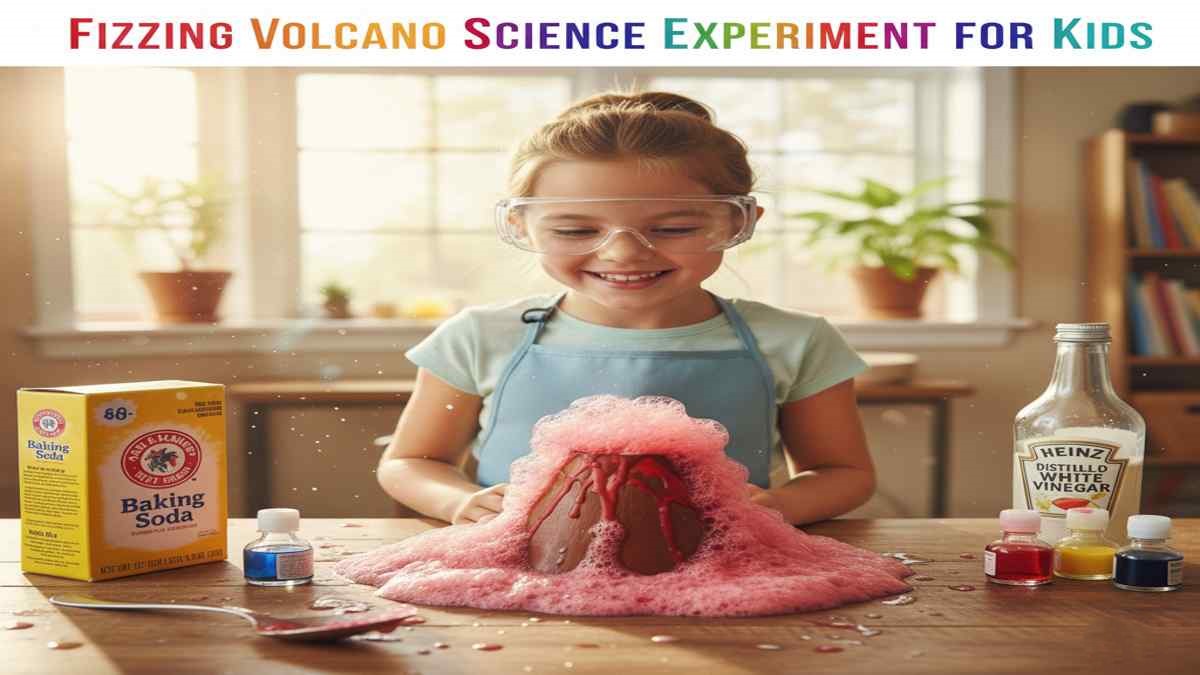
This fun science experiments for preschoolers demonstrates a chemical reaction between baking soda (a base) and vinegar (an acid). When they mix, they create carbon dioxide gas — the fizzing bubbles that make your volcano “erupt.” It’s a safe and exciting way for kids to learn how gases are formed during reactions and to explore real volcanic science in a playful way.
🌋 Fizzing Volcano Science Experiment for Kids
🧾 Materials Needed
- 🥄 Baking soda
- 🍋 Vinegar
- 🎨 Food coloring
- 🧴 Small cup or bottle
🧪 Steps to Create the Eruption
- Fill the cup with baking soda.
- Add a few drops of food coloring.
- Pour vinegar into the cup and step back to watch the fizzing eruption! 🌋
🔬 The Science Behind the Fizzing Volcano
When baking soda (a base) reacts with vinegar (an acid), they produce carbon dioxide gas. The fizzing bubbles you see are actually the gas escaping — a safe and exciting chemical reaction that demonstrates how acids and bases interact.
🌍 Related Science Reactions
Discover real volcanic activity and Earth’s dynamic changes in these fascinating reads:
🔗 Underwater Volcano Eruption 2025
🔗 Earth Spinning Faster 2025
🌈 Experiment No. 4 — Rainbow in a Jar
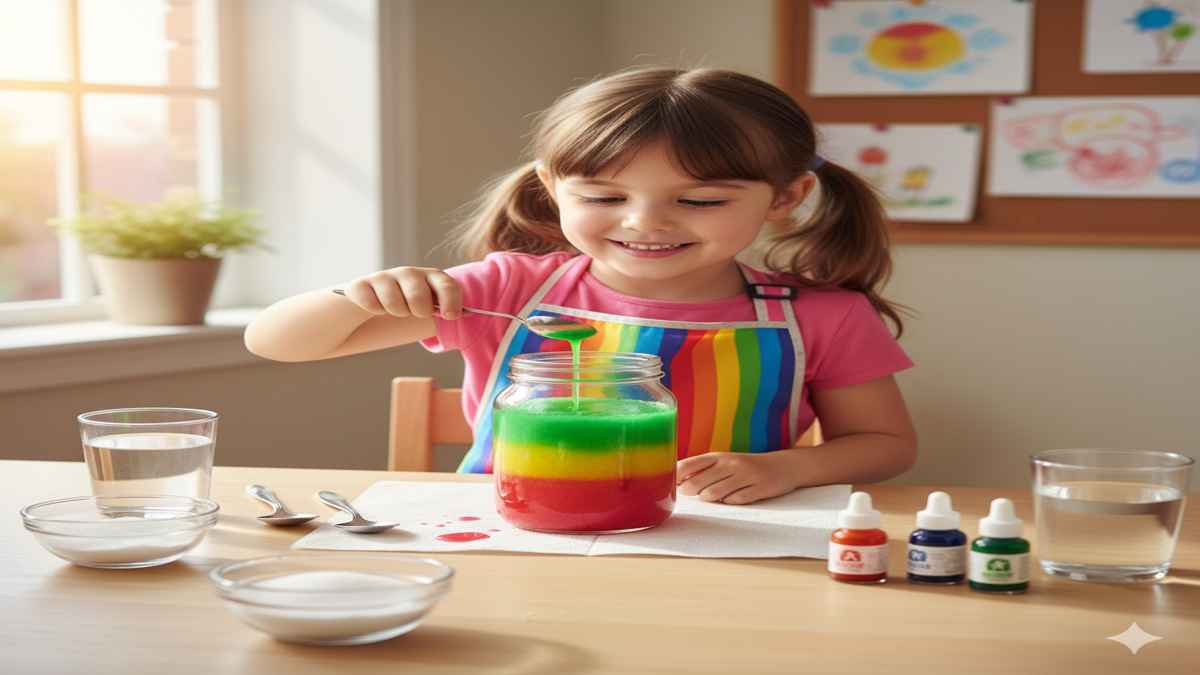
Each colored layer has a different sugar concentration — more sugar makes the liquid denser. When you carefully pour the solutions in the right order, the denser liquids stay at the bottom and the lighter ones float on top. This forms a beautiful rainbow effect and demonstrates the concept of liquid density.
🌈 Rainbow in a Jar
🧾 Materials
- 🍬 Sugar
- 💧 Water
- 🎨 Food coloring (different colors)
- 🥤 Spoons and a tall glass or jar
🛠️ Steps
- Mix water with increasing amounts of sugar (1 tbsp, 2 tbsp, 3 tbsp, etc.) and add a different color to each solution.
- Carefully pour the heaviest (most sugar) solution into the jar first, followed by the lighter ones, creating layers.
- Observe how the colors stack beautifully without mixing — forming a stunning rainbow effect!
⚡ Experiment No. 5 — Static Electricity Balloon Experiment
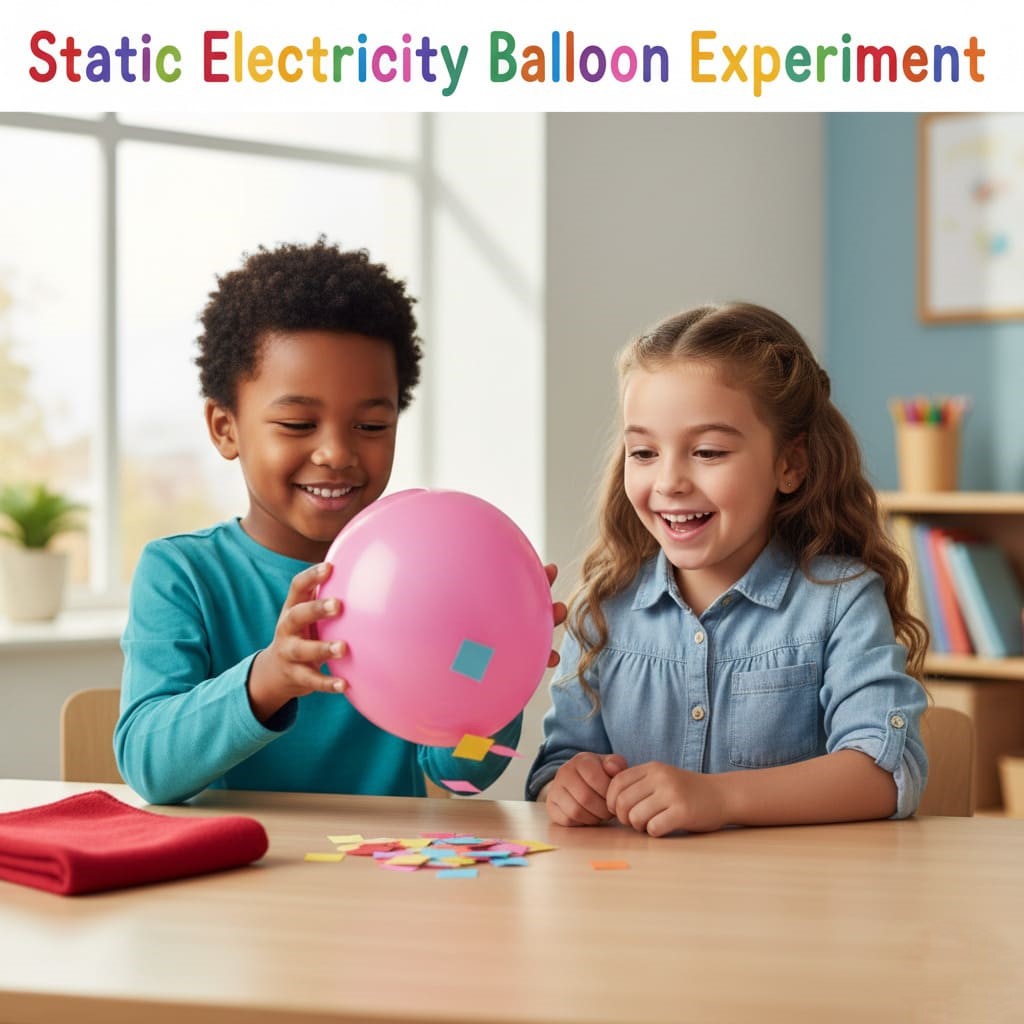
This simple science experiments for preschoolers shows how static electricity works. When you rub a balloon on your hair or wool, electrons move from one surface to another — giving the balloon a negative charge. The charged balloon attracts small, neutral paper bits due to electric forces. It’s a fun and hands-on way to teach preschoolers about invisible forces and how electricity can make things move!
⚡ Static Electricity Balloon
🧾 Materials
- Balloon
- Small pieces of paper
- Wool cloth or hair
🔬 Steps
- Blow up the balloon and tie it.
- Rub the balloon on your hair or wool cloth for 15–20 seconds.
- Hold the balloon near the paper pieces and watch them jump toward it!
💡 Science Behind It
When you rub the balloon, electrons move from your hair (or wool) to the balloon, giving it a static charge. The charged balloon attracts neutral paper bits — showing the power of electric forces in action!
🎯 Why Easy Science Experiments for Preschool Matter
Easy science experiments for preschoolers do much more than entertain — they spark curiosity, inspire creativity, and build a strong foundation for lifelong learning. Simple hands-on activities like the Walking Water Experiment, color mixing, or baking soda reactions teach kids how to observe, predict, and explore the world around them.
When children ask, “What will happen next?”, they’re thinking like real scientists. These playful experiences help develop early STEM skills, problem-solving abilities, and confidence in learning through discovery.
🌈 Hands-On Learning at Home
You don’t need fancy materials — just simple household items. Try making colorful rainbow jars or water-wicking paper towels to show how liquids move and mix. These activities combine fun with science, turning ordinary moments into exciting learning adventures.
If you’re looking for more creative ideas, explore trusted resources like Science Buddies and Exploratorium’s Science Snacks for dozens of preschool-friendly experiments.
🧠 Conclusion: Building Little Scientists Through Play
Easy Science experiments for preschoolers are more than classroom activities — they’re gateways to curiosity and imagination. Every bubbling volcano, color-changing jar, or “walking” water cup helps children understand the why behind the world around them.
By turning everyday materials into discovery tools, parents and teachers can nurture observation, creativity, and problem-solving from an early age. These simple experiments don’t just teach science — they inspire a lifelong love for learning.
❓ FAQs About Easy Science Experiments for Preschoolers
What are some fun Easy science experiments for preschoolers?
+Why are easy science experiments important for preschoolers?
+How can parents make science fun at home?
+What materials are needed for preschool science experiments?
+Are science experiments for preschoolers safe?
+